How to Choose the Right Tennis Balls
It might seem that there is not much difference between tennis balls, but that is not the case. Picking the best tennis ball for your surface, game and preferences could make a huge difference. All tennis balls have that same amazing smell that we all know, so what's the difference between all court balls, clay court balls, and premium versus championship balls? Let us explain!
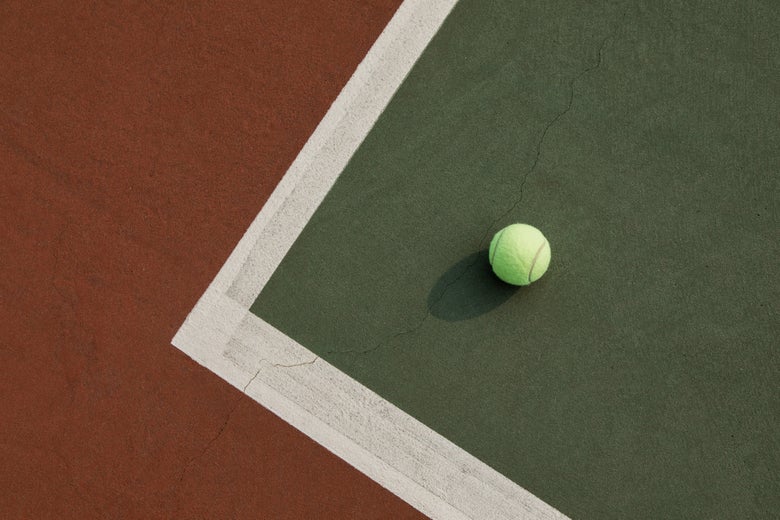
In general, tennis balls are made with a rubber core and covered in felt, which can be made of wool or synthetic materials. Most balls are also filled with compressed air and sold in pressurized cans. But despite the same basic construction, not all tennis balls are the same. Whenever (and wherever) you step on court, having the right tennis balls for the surface and location you’re playing in will help optimize your playing experience. Below we break down the different types of balls and what separates premium balls from the value options, to help you pick the best tennis ball for your needs.
Tennis Balls by Type
| Type | Best for |
| All Court | All court surfaces |
| Clay Court | Clay courts |
| Pressureless | Practice/ball machines |
| High Altitude |
Elevations above 1,200 m |
| Junior Foam Balls | Ages 3-5 |
| Junior Red Balls | Ages 6-8 |
| Junior Orange Balls | Ages 9-10 |
| Junior Green Dot Balls | Ages 11-13 |
Tennis Balls: Premium vs Value
Like with most things, tennis balls come at a variety of price levels. Here's a quick look at what the differences are, to help you gear up with the best tennis balls for beginners, the best tennis balls for competitors and the best premium tennis balls. To get into the real nitty gritty of tennis ball types, keep on reading!
| Tier | Characteristics | Examples |
| Premium |
More natural wool and woven felt equals better durability, resiliency, consistency |
- Wilson US Open |
| Championship | More synthetic fibers and less natural wool made with a needle-punch construction |
- Head Championship |
| Entry level | Made mostly of synthetic fibers and a needle-punch construction |
- Dunlop Training 60 Balls Polybag |
All-Court Tennis Balls
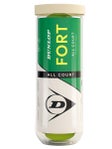
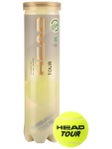
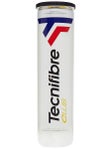
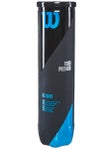
All-Court tennis balls are designed for all court surfaces, and they are not specifically made for one surface. In Europe, all-court balls will be generally be used on hard courts, concrete, carpet etc. This tennis ball type will be durable and will be a bit less suited for clay courts in general, since they are lacking the added special technologies, that clay court specific balls have. In some cases, all-court balls have a thicker felt, in order to extend the ball’s durability on harder surfaces.
Clay Court Tennis Balls
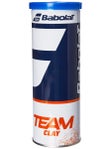
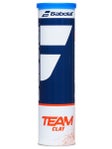
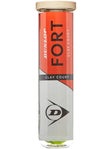
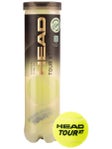
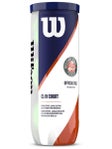
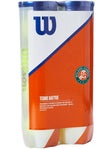
In Europe, clay court tennis balls are very common. These, in contrast with All-Court tennis balls, are specifically made to perform well on a clay court surface. In order to make the balls last longer on the demanding clay court surface, brands had to come up with special technologies. One of these technologies is the added unique water-proof coating. Since clay courts tend to have some moisture on their surface, this water-proof coating is added to prevent the ball from absorbing too much water, thus from becoming too heavy too quickly. During long matches, balls can quickly become darker as they pick up more dirt, and their visibility can diminish just as quickly. In order to prevent this, an additional special coating is added to the felt, which helps the clay court specific balls keep that perfect “tennis ball yellow” longer.
Pressureless Tennis Balls
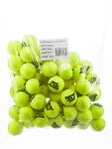
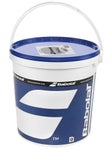
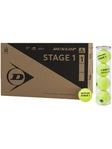
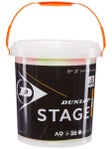
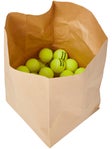
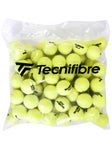
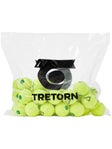
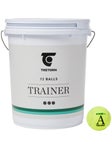
Pressureless tennis balls are often preferred by beginners, recreational players, or as a training tool because they last longer than regular pressurized balls. Instead of being filled with compressed air, pressureless tennis balls have thicker walls on the core, which gives them a unique sound at impact. These balls also retain their bounce over time, and therefore have a longer lifespan than a pressurized ball. This allows you to reduce the number of cans you need to open if just getting out for a practice or casual hit. Something to be mindful of is that pressureless tennis balls are heavier and harder than pressurized balls, which means that they will impact the racket with more force. The heavier force on the racket means that these tennis balls will not be as arm friendly as their pressurized counterparts. These balls are not typically used in competition.
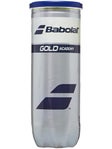
High Altitude Tennis Balls
High altitude tennis balls are designed to be used at altitudes above 1,200 meters. As a result of the thinner air, and the pressure difference between the inside of the ball and the air surrounding it, tennis balls generally fly much faster and bounce higher. To counteract the effects of high altitude, these balls are less pressurized or are pressureless to help bring you a more normal ball bounce and playing experience.
Junior Tennis Balls
Just like picking the right tennis racket or shoe, using the right tennis ball will have a big impact in helping a child’s tennis skill development. The categories these balls fall into are all based on hand-eye coordination level and age.
- Foam tennis balls are designed mainly for ages 3-5, as these are the largest and slowest in their category.
- Red tennis balls mean a bit firmer feel (more pressure inside) and slightly smaller size compared to foam balls.
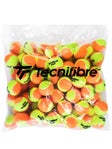
- Orange tennis balls, which are designed for ages 9-10, have even more pressure in the ball, and the circumference will be smaller as well.
- Green tennis balls will be the last step for junior balls, as these will be the closest to the regular “adult” tennis balls. Green balls are designed for players aged 11-13.
Listen in: All About Tennis Balls
Between Tennis Balls
Composition of a Tennis Ball: Why it Matters
When looking deeper into the parts that make up a tennis ball, there are three main components: felt (the yellow fuzz), core (rubber) and air or gas (pressurization).
Image below: Rolls of tennis ball felt. Courtesy of Head/Penn.

The Felt (Yellow Fuzzy Stuff)
The felt is a key component in how the tennis ball performs. The material used and the way it is constructed are key factors that separate a premium tennis ball from an entry-level or budget ball. Most of the tennis balls on the market (majority of the ones sold at Tennis Warehouse Europe) have a blend of natural wool and synthetic nylon fibers to comprise the optic yellow felt on the outer surface of the ball.
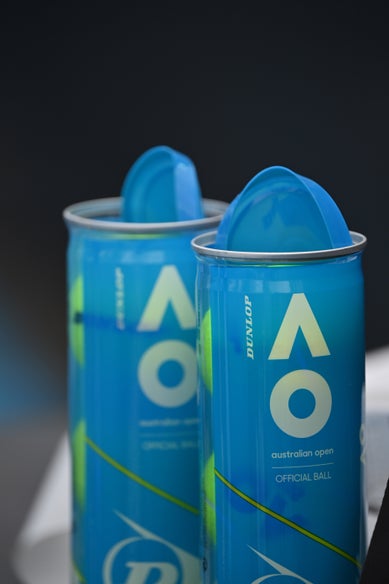
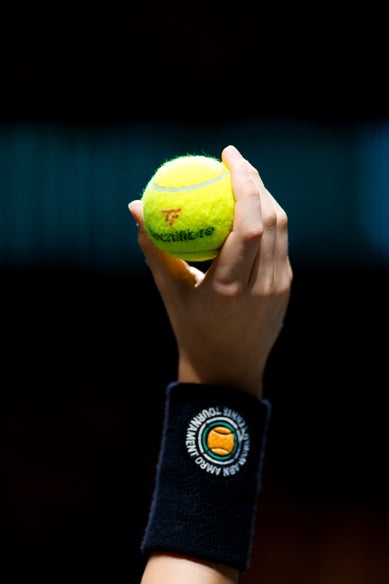
The premium tennis balls on the market, such as the Wilson US Open, Dunlop Fort All Court, Head Tour, Tecnifibre X-One, all have a higher concentration of natural wool fibers. Premium balls are almost always made with a woven construction; similar to how a premium rug is made from weaving the materials together.
Images below: Examples of premium Dunlop and Tecnifibre balls. Courtesy of Dunlop and Tecnifibre.
Of the balls that we sell at a lower price-point, such as the Championship (or Champ) line of tennis balls, you will typically find one of two things that varies from the premium balls. There are more nylon fibers in the felt and/or the construction is done by “needle-punch” instead of the woven application used on the premium balls.
Any balls below the Championship line of balls will be made of mostly or all with synthetic nylon fibers and will be a needle-punch felt. For those seeking a vegan-friendly tennis ball, you can sometimes find that the entry level balls have a full synthetic nylon felt without any natural wool content.
Of the balls that we carry, the pressureless tennis balls are made of synthetic fibers for the felt. Although these balls may be fully synthetic, the performance is typically poor in comparison to a Champion line ball and especially the premium balls. They also have a heavier, firm feel to them due to a thicker core construction and can create more shock on the player’s arms and the racket.
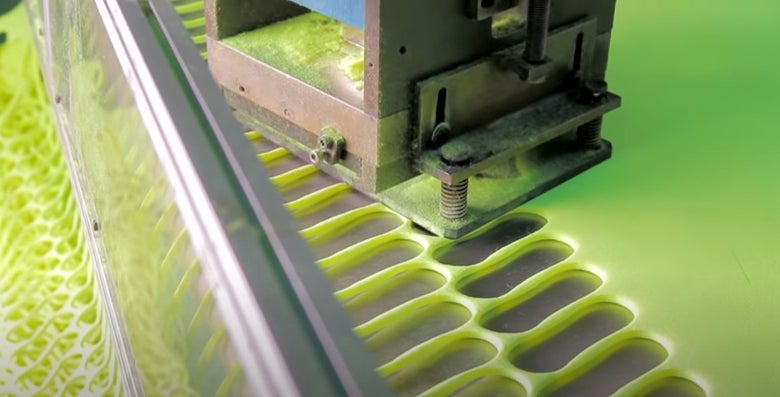
Image below: Felt being cut out. Courtesy of Head/Penn.
The Core (rubber material beneath the felt)
For the majority of tennis balls, the core is made of either natural or synthetic rubber, which is pressed by steel rollers to thin it out, then heated and cut into biscuit-like forms called slugs. These slugs are then shaped and molded to form a half sphere. Next, they are cured, sanded on the rims, and then the two half-spheres are connected with adhesive to form the tennis ball.
Image below: Tennis ball cores. Courtesy of Head/Penn.

During this process the ball is filled with compressed air. The combination of the rubber core and pressurized air gives fresh tennis balls that nice “pop” sound when they strike your strings (well hopefully strings and not your frame)! For the premium balls, and pretty much all the balls that Tennis Warehouse Europe sells, the core is formed from natural rubber that is derived from rubber trees and is often sourced from locations such as Thailand.
Dunlop has been in the rubber industry for many years, going back to 1926 with its origin in tires. Tecnifibre partners with Bridgestone Tires and uses premium natural rubber to make the cores for its tennis balls.
The Air or Gas (pressurization)
All of the Premium and Championship line of tennis balls that Tennis Warehouse Europe sells are typically pressurized with natural air. Tecnifibre explained that it uses the natural air composition when pressurizing its tennis balls, (78 percent nitrogen, 21 percent oxygen and the remaining 1 percent is a combination of argon, carbon dioxide and trace amounts of other gases). According to Tecnifibre's testing, nitrogen is less likely to permeate through the core of the ball. Tecnifibre has tried pressurizing balls with higher concentrations of nitrogen, even all nitrogen, but through playtesting found the performance and durability differences to be negligible.
There isn't a clear standard for how much pressure is used when filling the core with air, but in one case it was noted that there was an initial 1.24 bar (PSI of 18), and as the core was cured and sealed, it settled to 1.03 bar (15 PSI), which was the target spec. Most tennis balls are between 0.83 bar and 0.97 bar (12 and 14 PSI).
Image below: Penn Championship balls being packaged into a case. Courtesy of Head/Penn.

How do Materials Impact the Performance of Tennis Balls?
Premium tennis balls are made of a higher concentration of natural wool, which is more durable and provides a plusher feel when striking the ball. The natural fibers last longer and maintain the fluff of the felt better for more resiliency. Premium balls also have a thicker, woven felt, which increases durability, provides a better feel on contact and a more consistent bounce. The thicker felt correlates to a stronger, sturdier seam that joins the two pieces of felt together on a ball.
The natural rubber core in premium tennis balls provides the best consistency in the bounce and speed. As with the natural wool felt, the natural rubber has the best resiliency, which results in longer playability and maintains that “pop” sound better over time.
Lastly, the premium natural rubber cores contain the air pressure for longer, compared to synthetic types of rubber.
Below, check out our Tennis Ball Performance Experiment and shop the best tennis balls for your needs, from our wide range of models.